
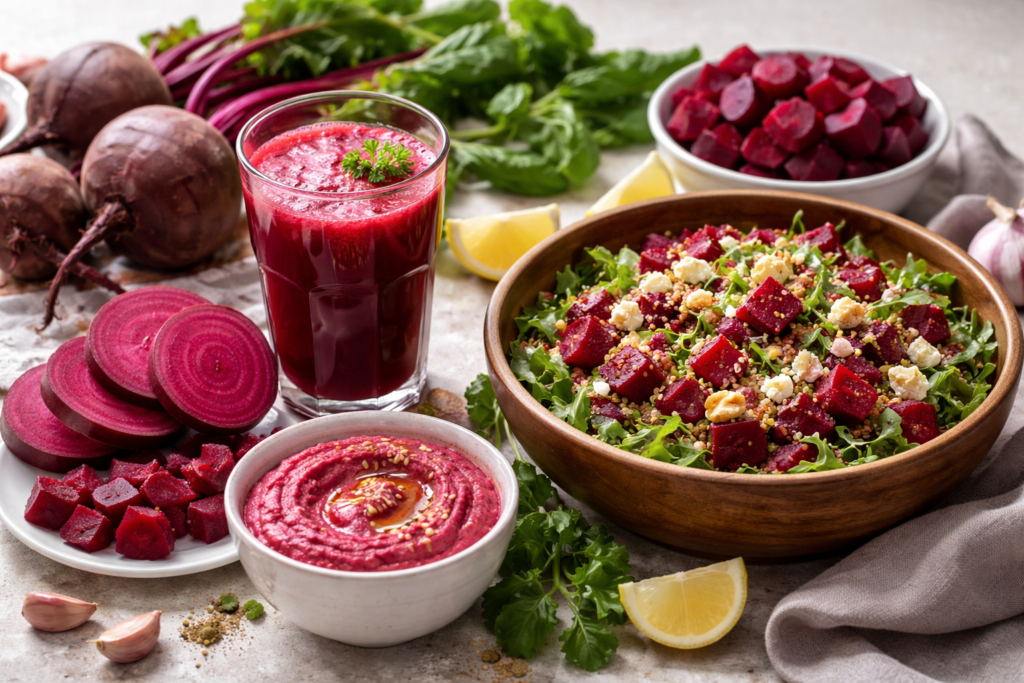
Why everyone is talking about beetroot:
Beetroot is gaining popularity as a natural way to support energy levels and overall health. Known for its deep red color and impressive nutrient profile, this root vegetable contains vitamins, minerals, and plant compounds that contribute to its growing reputation in wellness circles.
It is especially valued for its natural nitrates, which may help improve blood flow and support better oxygen delivery throughout the body. As a result, beetroot is often associated with increased stamina, enhanced physical performance, and improved daily vitality.
Whether consumed as juice, in meals, or as part of a balanced diet, beetroot offers a simple and natural way to support overall wellbeing.
Benefits of Beetroot
Beetroot offers a range of natural health benefits thanks to its rich supply of vitamins, minerals, and plant compounds. It may help support energy levels, improve blood flow, boost stamina, and promote overall heart and brain health when included regularly in a balanced diet. Here are some benefits of beetroot that make it a valuable addition to a healthy diet:
1. Supports Healthy Blood Flow
Beetroot contains natural nitrates that the body converts into nitric oxide. This helps relax blood vessels, improve circulation, and support better oxygen delivery throughout the body.
As a result, it may also help improve endurance, reduce fatigue, and support overall heart health.
2. Boosts Energy and Stamina
Beetroot is widely known for its ability to support natural energy levels. Its high nitrate content helps improve oxygen use in the body, which can make physical activity feel less tiring.
This makes beetroot especially useful for supporting endurance, enhancing workout performance, and reducing feelings of fatigue during the day.
3. Supports Heart Health
Beetroot may help support a healthy heart by promoting better blood flow and helping maintain normal blood pressure levels. Its natural nitrates are converted into nitric oxide, which helps relax blood vessels and improve circulation.
With its rich antioxidant content, beetroot may also help protect the heart from oxidative stress, supporting overall cardiovascular wellness when included in a balanced diet.
4. May Improve Brain Function
Beetroot may support brain health by improving blood flow and oxygen delivery to the brain. Better circulation can help enhance focus, memory, and mental clarity, especially during periods of fatigue or stress.
Its natural nitrates play a key role in supporting healthy brain function, making beetroot a simple addition to a diet aimed at maintaining sharp cognitive performance.
5. Rich in Antioxidants
Beetroot is packed with powerful antioxidants, especially betalains, which give it its deep red color. These compounds help protect the body from oxidative stress and may reduce damage caused by free radicals.
This antioxidant support can contribute to overall wellness, help the body maintain healthy cells, and support long-term immune and heart health when consumed regularly.
6. Supports Digestion
Beetroot is a good source of dietary fiber, which helps support healthy digestion and regular bowel movement. This fiber content can also help promote a healthier gut environment by feeding beneficial bacteria in the digestive system.
Including beetroot in your diet may help reduce constipation, support smoother digestion, and contribute to overall gut health and comfort.
How to Use Beetroot Daily
One of the biggest advantages of beetroot is how simple it is to include in your everyday meals. It does not require complicated preparation, and it can be enjoyed in several different forms depending on your preference and lifestyle.
Beetroot can be consumed as a fresh juice, which is one of the most popular methods for quickly absorbing its nutrients. It can also be blended into smoothies with fruits like banana, apple, or pineapple to balance its earthy taste while boosting overall nutrition.
For those who prefer solid meals, beetroot can be added to salads, either raw and grated or lightly boiled for a softer texture. It also works well when boiled, roasted, or steamed, making it a flexible ingredient for lunch or dinner dishes.
Because of its versatility, beetroot can easily fit into different diets without much effort. This makes it a practical option for people who want to enjoy its health benefits consistently without changing their eating habits drastically.
Beetroot is a natural gift that nourishes the body, supports energy, and promotes better health from the inside out.
Side Effects and Precautions
While beetroot is generally considered safe and healthy for most people, it may cause a few mild effects in some cases. One common and harmless side effect is beeturia, where urine or stool may appear pink or red after consumption. Although it can look unusual, it is not harmful and usually disappears within a short time.
Beetroot is also naturally high in oxalates, which means people who are prone to kidney stones should consume it in moderation. In some individuals, excessive intake may also lead to a slight drop in blood pressure due to its natural nitrate content.
Conclusion
Beetroot is more than just a colorful root vegetable, it is a natural source of nutrients that may support energy, blood circulation, heart health, digestion, and overall wellness. Its rich supply of nitrates, antioxidants, vitamins, and minerals makes it a valuable addition to a balanced diet.
When consumed regularly in moderation, whether as juice, in meals, or smoothies, beetroot can contribute to improved vitality and better day-to-day performance. However, like any healthy food, it works best as part of a well-rounded and nutritious lifestyle.
Frequently Asked Questions (FAQ)
1. What are the main beetroot benefits?
Beetroot may support energy levels, improve blood circulation, boost stamina, aid digestion, and promote heart and brain health.
2. Can I eat beetroot every day?
Yes, beetroot can be eaten daily in moderation as part of a balanced diet, whether as juice, salad, or cooked meals.
3. What is the best way to take beetroot?
Beetroot can be consumed as fresh juice, blended into smoothies, added to salads, or eaten boiled, roasted, or steamed.
4. Does beetroot really increase energy?
Yes, its natural nitrates may help improve oxygen use in the body, which can support better energy and endurance.
5. Are there any side effects of beetroot?
Beetroot is generally safe, but it may cause harmless red urine or stool in some people. Excess intake may not be suitable for those with kidney stone issues.
6. Is beetroot good for heart health?
Yes, beetroot may support healthy blood pressure and improve circulation, which is beneficial for overall heart health.
Start adding beetroot to your daily diet and experience its natural benefits for energy, circulation, and overall wellness. Try it in juice, salads, or smoothies and make it part of your healthy lifestyle today.
Also read:
👉 Turmeric Secrets Revealed: The Power of the Golden Root
👉 Ginger Uncovered: The Hidden Health Benefits No One Talks About
Pingback: Ginger Uncovered! The Secret Health Benefits No One Talks About - Daily Health Express
Pingback: Turmeric Secrets Revealed: Why This Golden Root Is Taking Over Natural Health - Daily Health Express
Pingback: Daily Routines That Can Help Keep Your Blood Pressure Balanced - Daily Health Express