
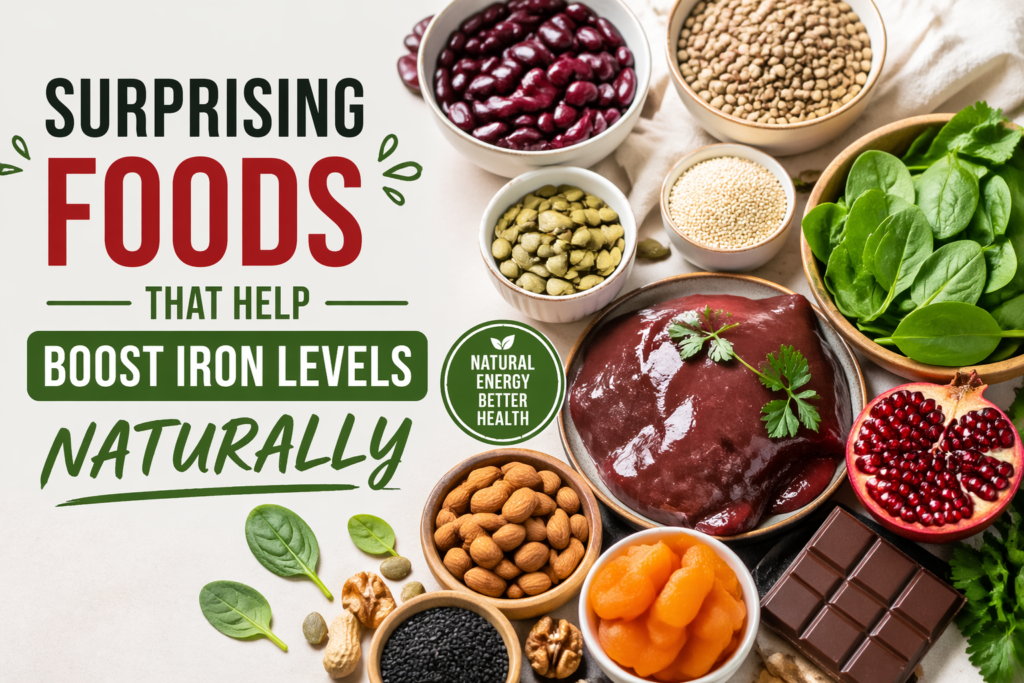
Boost Iron Levels Naturally:
Iron is an essential mineral the body needs to produce hemoglobin, the protein in red blood cells that carries oxygen throughout the body. Despite its importance, many people do not get enough iron from their daily diet, leading to symptoms such as fatigue, weakness, dizziness, pale skin, and poor concentration.
Low iron levels are often overlooked or mistaken for general tiredness or stress, yet over time they can affect energy, focus, and overall health. While red meat and supplements are commonly seen as the main sources of iron, they are not the only options available.
There are many everyday foods that can naturally help boost iron levels when included consistently in the diet. These foods, often found in both plant and animal sources, also contain other important nutrients that support better absorption and overall well-being. With the right combination of foods, it is possible to improve iron intake naturally and support healthier energy levels without relying only on supplements.
Why Iron Matters
Iron is an essential mineral that helps the body produce hemoglobin, the protein in red blood cells responsible for carrying oxygen throughout the body. This oxygen supply is needed for energy, brain function, and healthy muscles.
When iron levels are sufficient, the body functions smoothly and energy levels remain stable. But when iron is low, oxygen delivery is reduced, leading to tiredness, weakness, and poor concentration. In simple terms, iron keeps the body energized and functioning properly.
Surprising Iron Rich Foods You Should Know
Many people assume iron is only found in red meat or supplements, but several everyday foods can also help boost iron levels naturally. Including a variety of these foods in your diet can support better energy and overall health.
1. Pumpkin Seeds
Pumpkin seeds are small but highly nutrient-dense, making them a strong plant-based source of iron. They can help support healthy blood production and improve energy levels when eaten regularly.
They are very easy to include in your diet, just add them to salads, smoothies, oatmeal, or enjoy them as a quick snack. In addition to iron, they also provide magnesium, zinc, protein, and healthy fats, which support overall health and immunity.
2. Leafy Greens
Leafy greens like spinach, kale, and moringa leaves are excellent natural sources of iron. They contain non-heme iron, which helps support healthy blood production and energy levels when eaten regularly.
To improve absorption, it’s best to combine them with vitamin C-rich foods such as oranges, tomatoes, or peppers. They are easy to add to soups, stews, salads, or smoothies, making them a simple way to boost your daily iron intake.
3. Beetroot
Beetroot is a nutrient-rich root vegetable known for supporting healthy blood production and circulation. It contains iron and other compounds that help improve oxygen flow in the body, which can boost energy levels over time.
It can be eaten raw, juiced, boiled, or added to salads and smoothies. Regular intake of beetroot may help support overall blood health and reduce feelings of fatigue naturally.
4. Lentils and Beans
Lentils, chickpeas, and beans are excellent plant-based sources of iron, making them a staple for improving daily iron intake naturally. They also provide protein and fiber, which help support energy, digestion, and overall health.
These foods are very versatile and can be added to soups, stews, salads, or rice dishes. When eaten regularly, they can help support healthy blood levels and maintain steady energy throughout the day.
5. Sesame Seeds
Sesame seeds are often overlooked, but they are a rich plant-based source of iron and other important minerals. Even in small amounts, they can contribute to better iron intake when included regularly in meals.
They are very easy to use, sprinkle them on salads, porridge, rice, or blend them into tahini paste. Along with iron, sesame seeds also provide healthy fats and calcium, supporting overall bone and blood health.
6. Dried Fruits
Dried fruits like raisins, dates, and apricots contain small but helpful amounts of iron, along with natural sugars that provide quick energy. They are a simple and tasty way to support daily iron intake.
They can be eaten as snacks or added to cereals, oats, or yogurt. When combined with other iron-rich foods, dried fruits help contribute to better overall nutrition and energy levels.
7. Dark Chocolate
Dark chocolate is a surprising source of iron, especially varieties with a high cocoa content. It contains plant-based iron along with antioxidants that support overall health.
Eating it in moderation can help contribute to your daily iron intake while also boosting mood and energy. For best results, choose dark chocolate with at least 70% cocoa and avoid versions high in added sugar.
8. Eggs
Eggs are a simple and widely available source of iron, providing a moderate amount along with high-quality protein. They help support overall blood health and energy production when included in a balanced diet.
They are also very versatile and can be boiled, fried, scrambled, or added to salads and meals. While not the highest iron source, eggs work well alongside other iron-rich foods to support better nutrition.
Benefits of Maintaining Healthy Iron Levels
Keeping your iron levels within a healthy range plays a major role in how your body feels and functions every day. Iron is not just about preventing deficiency, it directly supports overall vitality and long-term wellness.
Boosts Energy Levels
Iron helps carry oxygen throughout the body, which supports steady energy production and reduces feelings of fatigue and weakness.
Improves Brain Function
Adequate iron supports better oxygen supply to the brain, helping with focus, memory, and mental clarity.
Supports Healthy Blood Production
Iron is essential for the formation of hemoglobin and red blood cells, which keep your blood healthy and efficient.
Enhances Physical Performance
With proper iron levels, muscles receive enough oxygen, improving strength, endurance, and overall physical activity.
Strengthens Immunity
Iron plays a role in supporting a healthy immune system, helping the body fight infections more effectively.
Reduces Risk of Fatigue and Dizziness
With proper iron levels, muscles receive enough oxygen, improving strength, endurance, and overall physical activity.
With proper iron levels, muscles receive enough oxygen, improving strength, endurance, and overall physical activity.
Conclusion
Iron is a vital mineral that supports energy, brain function, and healthy blood production. While deficiency is common, it can often be improved through simple dietary changes rather than relying only on supplements.
By including a variety of natural iron-rich foods such as seeds, legumes, leafy greens, fruits, and other nutrient-dense options, you can support your body’s iron levels in a steady and natural way. The key is consistency and balance in your daily meals.
Small, mindful food choices every day can lead to better energy, improved focus, and overall stronger health over time.
Frequently Asked Questions (FAQs)
Q: How long does it take to improve iron levels naturally?
It depends on how low your iron levels are and how consistent your diet is. In most cases, noticeable improvement can take a few weeks to a few months with regular intake of iron-rich foods.
Q: Can iron deficiency be corrected without supplements?
Mild iron deficiency can often be improved through diet alone. However, severe deficiency or anemia may require medical supplements as advised by a healthcare professional.
Q: What is the best time to eat iron-rich foods?
Iron-rich foods can be eaten at any time, but they are best absorbed when taken with vitamin C-rich foods and not immediately combined with tea or coffee.
Q: Are plant-based iron sources enough for daily needs?
Yes, when properly planned. Combining beans, lentils, seeds, and leafy greens with vitamin C foods can help meet daily iron requirements.
Start adding more iron-rich foods to your daily meals and support your energy naturally. Share this post with someone who may need it and stay tuned for more simple health tips.