
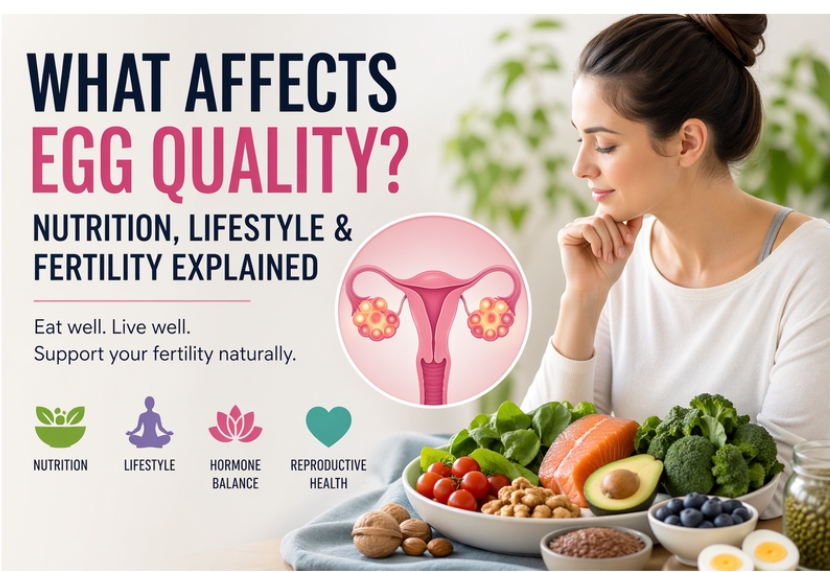
“Egg Quality”
Many women trying to conceive focus heavily on medications and fertility treatments, but one of the most overlooked factors is daily nutrition and lifestyle.
What you eat, how you live, and how your body functions internally all play a role in supporting reproductive health over time.
Your diet doesn’t just fuel your body; it also plays a role in supporting reproductive health and the environment in which eggs develop over time.
The good news? You don’t need extreme diets or expensive products. Small, consistent food choices may help support overall reproductive health and hormonal balance over time.
What Is Egg Quality? (In Simple Terms)
Egg quality refers to the biological integrity of a woman’s oocytes (eggs), specifically their genetic stability, mitochondrial function, and ability to be successfully fertilized and support early embryo development.
In simple biological terms, a “high-quality” egg has fewer chromosomal abnormalities, stronger cellular energy production, and a better chance of resulting in a healthy pregnancy.
From a scientific standpoint, egg quality naturally declines with age due to reduced mitochondrial efficiency and increased oxidative stress within cells. However, age is not the only influencing factor. Research shows that oxidative stress, chronic inflammation, poor sleep, elevated stress hormones, exposure to environmental toxins, and nutrient deficiencies can all negatively affect reproductive function.
And here’s the part many people don’t hear enough:
Your body is constantly responding to your environment, including what you eat, how you rest, and how you live.
While no food or supplement can reverse biology or “fix” egg quality overnight, a nutrient-dense diet rich in antioxidants, healthy fats, vitamins, and minerals can help support cellular health and reduce oxidative damage, which plays a role in reproductive wellness over time.
Because at the heart of it, egg quality is not just a medical concept, it reflects the overall health of the body that is nourishing it.
Key Nutrients That May Support Egg Quality and Reproductive Health
The health of an egg is closely connected to the health of the body itself. Every cell in the body, including reproductive cells, depends on a steady supply of nutrients to function properly.
Certain nutrients are especially important because they help support hormone balance, cellular energy production, blood flow, and protection against oxidative stress.
1. Antioxidants: Protecting Eggs From Oxidative Stress
Oxidative stress occurs when harmful molecules called free radicals damage healthy cells, including egg cells. Over time, this may affect reproductive health and egg quality.
Antioxidants help protect the body by neutralizing these harmful compounds and supporting healthy cellular function. Foods like berries, spinach, kale, and bell peppers are rich in antioxidants that may help support reproductive wellness and protect cells from oxidative damage.
2. Healthy Fats: Supporting Hormone Balance
Healthy fats play an important role in hormone production, which is essential for reproductive health and egg development. Certain fats, especially omega-3 fatty acids, may also help reduce inflammation and support healthy blood flow to reproductive organs.
Foods such as avocados, olive oil, nuts, seeds, and fatty fish provide healthy fats that can help support overall fertility wellness and hormonal balance.
3. Folate (Vitamin B9): Supporting Healthy Cell Development
Folate is essential for healthy cell division and DNA production, both of which are important for reproductive health and egg development. Low folate levels may negatively affect fertility and overall reproductive function.
Foods such as leafy greens, beans, lentils, citrus fruits, and asparagus are rich in folate and may help support reproductive wellness and healthy cellular development.
4. Iron: Supporting Oxygen Delivery and Reproductive Health
Iron plays an important role in carrying oxygen throughout the body, helping support healthy blood flow and cellular function. Proper oxygen delivery is essential for overall reproductive health and may help support a healthy environment for egg development.
Foods such as leafy greens, beans, lentils, pumpkin seeds, and lean red meat are good sources of iron that can support overall fertility wellness.
5. Protein: Building and Supporting Reproductive Cells
Protein is essential for building and repairing body tissues, producing hormones, and supporting overall cellular health. These processes are important for healthy egg development and reproductive function.
Foods such as eggs, fish, chicken, legumes, and yogurt provide high-quality protein that may help support fertility wellness and overall reproductive health.
Lifestyle Matters Too
Nutrition is important, but lifestyle choices also play a major role in reproductive health. The body responds to daily habits, and over time, these can influence overall fertility wellness.
Getting enough quality sleep, managing stress levels, staying physically active, and avoiding smoking or excessive alcohol can help support hormonal balance and reduce oxidative stress. Maintaining a healthy weight and reducing exposure to environmental toxins may also contribute to better reproductive function.
When combined with a balanced, nutrient-rich diet, these lifestyle habits work together to support the body’s natural reproductive processes.
Foods That May Harm Egg Quality
Just as some foods can support reproductive health, others may negatively affect it when consumed regularly or in excess. Highly processed foods, refined sugars, and trans fats can increase inflammation and oxidative stress in the body, which may impact cellular health over time, including egg cells.
Excessive intake of ultra-processed snacks, sugary drinks, and deep-fried foods may also disrupt hormonal balance and contribute to poor metabolic health. Additionally, high caffeine intake and alcohol consumption may place extra stress on the reproductive system when not moderated.
Focusing on whole, nutrient-dense foods while limiting processed and inflammatory foods can help support a healthier internal environment for overall reproductive wellness.
How Nutrition and Lifestyle Work Together
Nutrition and lifestyle are closely connected when it comes to reproductive health. The body doesn’t respond to food in isolation, it responds to the overall environment you create through daily habits.
A nutrient-rich diet provides the building blocks for healthy hormones, cells, and energy production, while lifestyle factors such as sleep, stress levels, physical activity, and exposure to toxins influence how effectively the body uses those nutrients.
When both areas are balanced, they work together to reduce oxidative stress, support hormonal harmony, and create a healthier internal environment for reproductive function over time.
Signs of Good vs. Poor Egg Quality
Egg quality itself cannot be directly seen or felt, but certain reproductive and hormonal patterns may give indirect clues about overall ovarian health.
Signs that may be associated with better egg quality can include regular menstrual cycles, predictable ovulation, and overall hormonal balance. These patterns often reflect a well-functioning reproductive system.
On the other hand, signs that may be associated with reduced egg quality or hormonal imbalance can include irregular cycles, difficulty conceiving over time, changes in cycle length, or conditions such as polycystic ovary syndrome (PCOS). These signs do not confirm egg quality on their own but may indicate that further medical evaluation is needed.
Because many factors can influence fertility, only proper medical assessment can provide a clear understanding of egg quality and reproductive.
Can Egg Quality Be Improved Naturally?
Egg quality is influenced largely by age, but research suggests that certain lifestyle and nutritional factors may help support better reproductive health over time. While no natural method can guarantee improved egg quality or reverse biological aging, the body can be supported in ways that promote healthier cellular function and a more favorable environment for fertility.
1. Nutrition May Play a Supporting Role
A nutrient-rich diet can help reduce oxidative stress and support overall cellular health, including reproductive cells. Foods rich in antioxidants, healthy fats, folate, and iron may help protect cells and support hormonal balance.
Examples include leafy greens, berries, nuts, seeds, legumes, and healthy oils like olive oil.
2. Reducing Oxidative Stress Matters
Oxidative stress is one of the factors that may negatively affect egg quality. It occurs when there is an imbalance between free radicals and antioxidants in the body. Supporting the body with antioxidant-rich foods, regular physical activity, and good sleep may help reduce this stress.
3. Healthy Lifestyle Habits Are Important
Daily habits can influence reproductive health over time. Factors that may help include:
- Getting consistent, quality sleep
- Managing stress levels
- Staying physically active
- Avoiding smoking and limiting alcohol intake
- Maintaining a healthy body weight
These habits support hormonal balance and overall metabolic health, which are both important for fertility.
4. Avoiding Inflammatory Triggers
Highly processed foods, excess sugar, and trans fats may contribute to inflammation in the body. Reducing these foods and focusing on whole, minimally processed options may help support a healthier internal environment.
5. Medical Support Still Matters
While natural lifestyle changes can support reproductive health, they cannot replace medical evaluation or treatment when needed. Fertility is complex, and factors such as age, genetics, and medical conditions also play a major role.
Final Thoughts
Egg quality is influenced by a combination of age, nutrition, lifestyle, and overall health. While it cannot be changed overnight, consistent support through nutrient-rich foods and healthy daily habits may help create a more favorable environment for reproductive wellness.
Consistent choices, what you eat, how you sleep, and how you manage stress, work together over time to support overall health. Instead of focusing on quick fixes, the most effective approach is building long-term habits that nourish the body as a whole.
FAQ: Egg Quality and Natural Support
What is egg quality?
Egg quality refers to the health and genetic integrity of a woman’s eggs (oocytes). High-quality eggs are more likely to be successfully fertilized and support early embryo development.
Can egg quality be improved naturally?
Egg quality cannot be fully changed or reversed, especially with age. However, healthy lifestyle and nutrition may help support better cellular function and create a more favorable environment for reproductive health.
What foods may support egg quality?
Foods rich in antioxidants, healthy fats, vitamins, and minerals may support reproductive health. These include leafy greens, berries, nuts, seeds, legumes, avocados, and fatty fish.
How does age affect egg quality?
As a woman ages, egg quality naturally declines due to reduced mitochondrial function and increased risk of chromosomal abnormalities. This is a normal biological process.
Does stress affect egg quality?
Chronic stress may affect hormone balance and overall reproductive function. Managing stress through rest, relaxation, and healthy routines may support fertility wellness.
Can supplements improve egg quality?
Some supplements may support overall reproductive health, but they cannot guarantee improved egg quality. It is best to consult a healthcare professional before using any supplements.
How long does it take to see lifestyle effects on fertility?
Lifestyle changes support the body gradually. Improvements in overall health may take several months, as egg development is a slow biological process.
Disclaimer: This article is for informational purposes only and does not replace professional medical advice, diagnosis, or treatment. Always consult a qualified healthcare provider regarding fertility or reproductive health concerns.
Pingback: Everyday Foods That Could Be Disrupting Your Hormone Balance and Fertility - Daily Health Express