
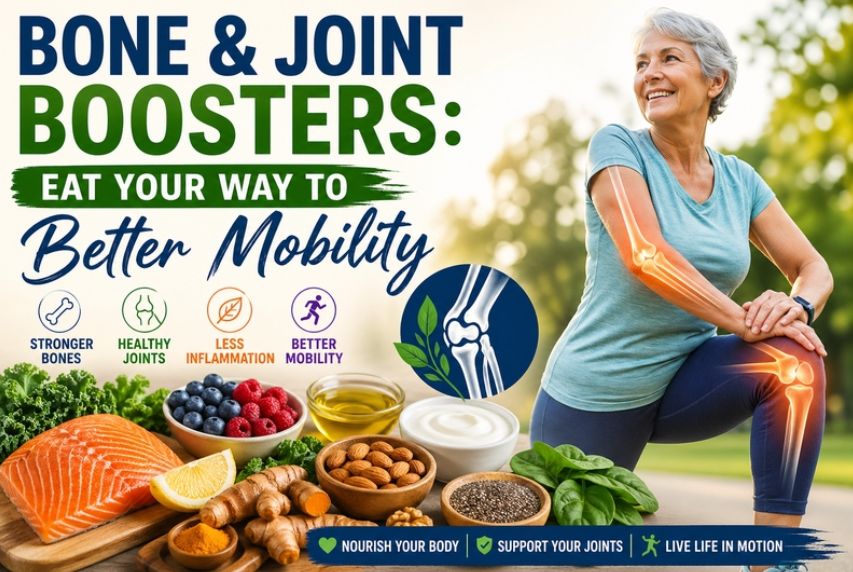
Bone & Joint Boosters can play a major role in improving mobility and supporting healthy aging. As we age, our bones and joints naturally weaken, leading to conditions like osteoporosis, arthritis, and reduced mobility 😔. The idea of relying on others for simple tasks or missing out on activities we love can be discouraging.
But here’s the good news: you can support your bones and joints through food 💥
Eating the right nutrients can strengthen your bones, improve joint health, and help you stay active and mobile.
Imagine This…
Waking up every morning feeling energized, flexible, and ready for the day without stiffness or pain. Moving with confidence, completing daily tasks easily, and enjoying life without limitation.
With the right diet and lifestyle, this can become your reality.
The Building Blocks of Strong Bones and Joints
Before we dive into the top foods, let’s understand what our bones and joints need to stay healthy. Our bones are living tissues that require a constant supply of nutrients to stay strong. Calcium, vitamin D, and magnesium are just a few of the key players in the game of bone health.
- Calcium: Supports bone density and strength
- Vitamin D: Helps calcium absorption and bone health
- Omega-3s: Reduce inflammation and support joint health
- Magnesium: Crucial for bone mineralization and muscle function
- Vitamin K: Helps regulate calcium and supports bone structure
These nutrients work together to keep our bones strong and our joints flexible. Let’s explore the top foods that’ll provide these essential nutrients.
Top Foods for Stronger Bones and Joints
Incorporating these foods into your diet can make a significant difference in your bone and joint health. Let’s dive into the top foods that’ll help you build a stronger, more agile you.
1. Fatty Fish (Salmon, Sardines, Mackerel):
Packed with omega-3s and vitamin D, these fish are a double punch for bone and joint health 🐟. Omega-3s reduce inflammation, easing joint pain and stiffness, while vitamin D supports calcium absorption and bone density.
2. Leafy Greens (Kale, Spinach, Collard Greens):
Rich in calcium, magnesium, and vitamin K, these greens are like a superpower for your bones 🥗. Calcium supports bone strength, magnesium aids bone mineralization, and vitamin K regulates calcium and supports bone health.
3. Dairy (Milk, Cheese, Yogurt):
Calcium-rich dairy products are a no-brainer for bone health 🐮. They support bone density and strength, so choose low-fat or fortified options for added benefits.
4. Nuts and Seeds (Almonds, Chia Seeds, flaxseeds):
These tiny powerhouses are packed with magnesium, calcium, and healthy fats 🌰. Magnesium supports bone and muscle health, and healthy fats reduce inflammation.
5. Olive Oil:
This healthy fat reduces inflammation and supports joint health 💧. Its anti-inflammatory properties ease joint pain and support overall health and mobility.
6. Turmeric:
Curcumin, the active compound in turmeric, is a natural anti-inflammatory 🔥. It reduces joint pain and inflammation, supporting overall health and mobility.
7. Berries:
Antioxidant-rich berries like blueberries and raspberries fight inflammation and support overall health 🍓. They reduce oxidative stress and inflammation, supporting overall health and mobility.
Meal Plan Ideas
Incorporating these foods into your diet is easier than you think! Here are some meal ideas that’ll get you started.
- Breakfast: Oatmeal with berries, nuts, and milk
- Lunch: Grilled salmon with leafy greens and olive oil dressing.
- Dinner: Turmeric-spiced chicken with vegetables and quinoa
- Snacks: Greek yogurt with berries or mixed nuts
Lifestyle Tips for Better Bone and Joint Health
Beyond diet, simple lifestyle tweaks can make a big difference in your bone and joint health.
- Regular exercise strengthens bones and improves mobility.
- Maintaining a healthy weight reduces pressure on joints and supports mobility
- Quitting smoking is a big win for bones, it damages bone health and increases fracture risk 🚭.
- Limit processed foods and focus on whole, nutrient-dense foods to give your body the best fuel for optimal bone and joint function.
Exercise for Bone Health
Weight-bearing activities like walking, jogging, or dancing strengthen bones and improve mobility 💪. Resistance training with weights or bands boosts bone health and muscle strength, supporting joints. Aim for a mix of activities that get you moving and keep you engaged, find something you love, and you’ll stick with it! 😊
Maintaining a Healthy Weight
Keeping a healthy weight is a win-win for your bones and joints 🐾. Extra pounds put more pressure on your joints, especially knees, hips, and ankles, increasing strain and discomfort. By maintaining a healthy weight, you reduce that load and support better mobility. Plus, a balanced diet with plenty of nutrients gives your bones the fuel they need to stay strong 💪.
Quitting Smoking for Bone Health
Quitting smoking is a big win for bone health because smoking increases fracture risk and weakens bones 🚭. Quitting boosts blood flow and nutrient delivery to bones, supporting overall health.
Limit processed foods
Processed foods often mean extra sugars, salts, and unhealthy fats that can trigger inflammation and worsen joint pain. Think fresh, think nutrient-dense, and give your body the good stuff 💪!
Conclusion
Taking care of your bones and joints is a lifelong journey, and small changes add up! Focus on balanced nutrition, rich in calcium, vitamin D, and other key nutrients.
Stay active with exercises that work for you, weight-bearing activities, strength training, and flexibility moves all play a role. Maintaining a healthy weight reduces pressure on joints and supports mobility. Ditch habits like smoking that can harm bone health 🚭.
Whether it’s managing arthritis, boosting bone density, or just keeping mobile as you age, proactive steps make a big difference.
Frequently Asked Questions (FAQ)
Can diet alone prevent osteoporosis?
While diet plays a crucial role, a combination of diet, exercise, and lifestyle changes is best.
How much calcium do I need daily?
Adults typically need 1,000-1,200 mg of calcium per day.
Are supplements necessary?
Only take supplements after consulting a healthcare professional.
Did you find this helpful? Share this post with friends and family to help them support their bone and joint health naturally
Explore more wellness tips and articles
👉 7 Health Tips for a Happier, Healthier You