
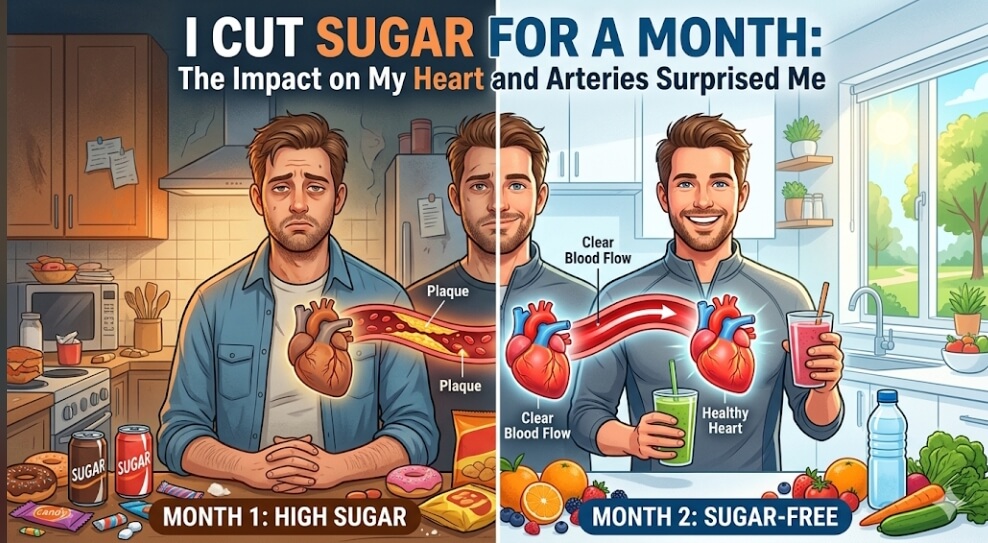
Deciding to cut sugar for an entire month was one of the most challenging experiments I have ever tried, but the results completely changed my approach to nutrition. While I expected to notice changes in my daily energy levels, the actual impact on my heart and arteries caught me entirely off guard.
A few months ago, I found myself feeling tired almost every afternoon. No matter how much coffee I drank or how early I went to bed, I still felt sluggish. My energy seemed to disappear by lunchtime, and I often experienced that familiar afternoon crash that left me reaching for something sweet.
At first, I blamed stress, poor sleep, and a busy schedule. But then I started paying closer attention to my diet. That’s when I realized just how much added sugar had quietly become a part of my daily routine.
Sweetened coffee in the morning. A pastry or cereal for breakfast. A soda with lunch. Cookies or chocolate as an afternoon snack. A dessert after dinner. None of these choices seemed extreme on their own. But together, they added up quickly.
So I decided to run a simple experiment: I would cut out added sugar for 30 days and see what happened. What surprised me most wasn’t just the massive improvement in my daily stamina. It was what I learned about how sugar directly impacts arterial health, blood vessel flexibility, and long-term vitality.
The First Week Was Harder Than I Expected
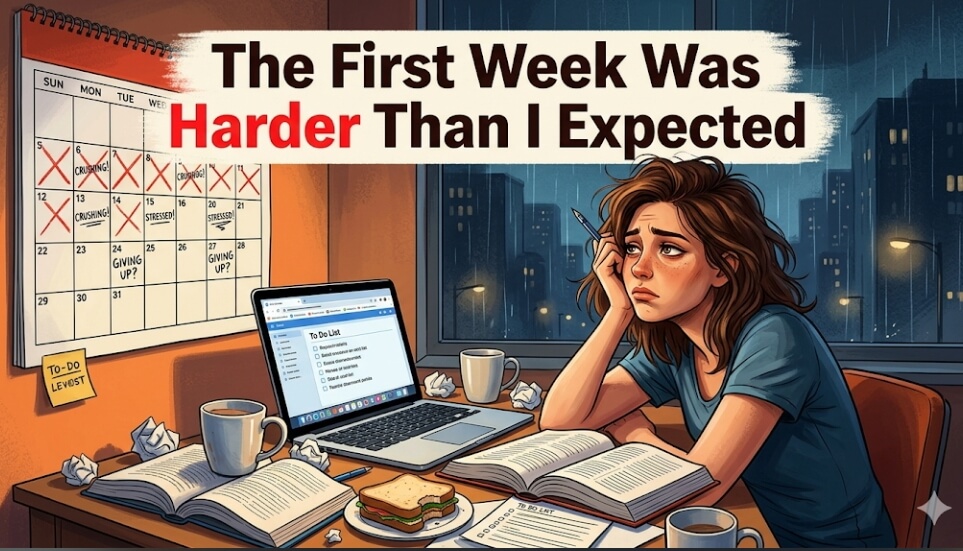
The first few days were rough. I noticed cravings almost immediately. Around my usual snack times, I found myself wanting something sweet. I felt irritable, and my energy seemed to dip even lower than before.
Looking back, I realized my body had become accustomed to frequent, aggressive spikes of sugar throughout the day. Without those quick bursts of artificial fuel, my system had to shift gears and learn to rely on more stable energy sources from balanced, whole foods.
By the end of the first week, however, something started to change. The cravings became less intense, and I no longer felt controlled by them.
My Energy Became More Consistent
Around the second week, I noticed one of the biggest benefits of the entire experiment: I wasn’t experiencing dramatic energy crashes anymore.
Instead of feeling energized for an hour after eating something sweet and then feeling utterly exhausted shortly afterward, my energy felt entirely stable throughout the day. I could focus longer, I felt significantly more productive, and even my workouts felt easier because I wasn’t constantly battling sudden fatigue.
This dramatic shift made me incredibly curious about what was happening inside my body at a deeper level.
What Sugar Actually Does to Your Arteries
Most people associate sugar purely with weight gain or blood sugar management. But as a content creator deeply invested in wellness, I wanted to look closer at the vascular science. Research reveals that regularly consuming high amounts of added sugar directly stresses the endothelium—the delicate inner lining of your blood vessels.
When you constantly spike your blood glucose, it contributes to low-grade inflammation and oxidative stress within the body. Over time, these processes can impair the natural elasticity of your blood vessels.
Healthy arteries are designed to remain flexible and supple, expanding and contracting easily to allow oxygen-rich blood to flow efficiently to your brain and muscles. When your diet is overloaded with sugar, that vital flexibility can suffer, leading to premature arterial stiffness.
According to guidelines from the World Health Organization (WHO), reducing free sugar intake is an important step in lowering the risk of cardiovascular disease and supporting overall metabolic health. When your arteries are supple and functioning well, your heart does not have to work as hard to deliver oxygen and nutrients throughout the body.
Unexpected Changes I Noticed by Week Three
By the third week, I began noticing smaller, brilliant improvements that I hadn’t originally anticipated:
- Deeper, More Restful Sleep: I fell asleep more easily and woke up feeling genuinely refreshed, rather than waking up with morning grogginess.
- Sharper Afternoon Focus: My concentration remained crisp, especially during those notoriously difficult afternoon hours between 2:00 PM and 5:00 PM.
- A Reset Taste Palette: The constant urge for processed sweets completely disappeared. In fact, fresh fruit suddenly tasted incredibly vibrant and naturally sweet.
- More Stable Moods: Because my blood sugar wasn’t skyrocketing and plummeting, I experienced fewer mood swings and a much calmer baseline throughout the day.
What I Ate Instead to Support My Vascular System
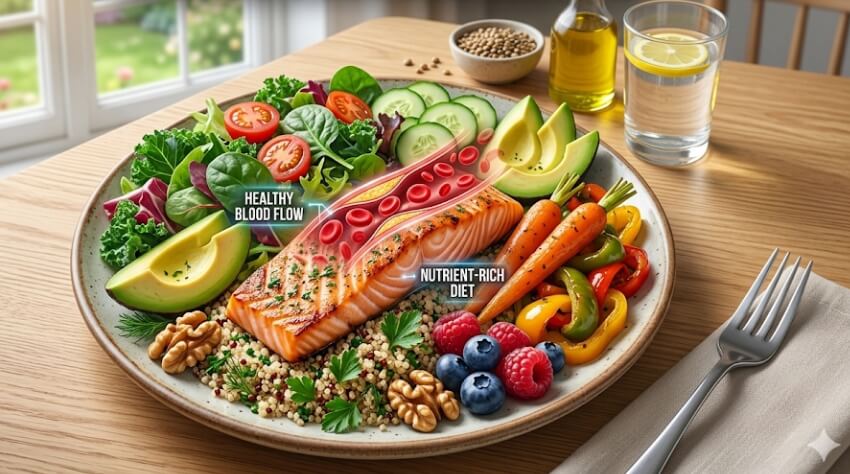
Instead of relying on sugary, convenience foods that drain your vitality, I focused heavily on whole foods that actively support vascular health and cellular energy. Some of my favorite replacements included:
- Fresh berries and apples with almond butter (packed with antioxidants and healthy fats)
- Greek yogurt topped with walnuts and chia seeds
- Avocados, eggs, and oatmeal for slow-burning, sustained fuel
- Fresh vegetables paired with hummus
The Ultimate Lesson: Energy is a Reflection of Flow
The most important thing I discovered during these 30 days is that true, vibrant energy isn’t something you can force with a third cup of coffee or a sugary snack. Energy is about supporting the internal systems that deliver oxygen and nutrients throughout your entire body.
Your circulatory network works around the clock to keep every single organ functioning properly. Taking care of it doesn’t require complicated, expensive supplements or extreme programs. Sometimes, the simplest daily choices make the most profound difference.
Reducing added sugar, prioritizing nutrient-dense whole foods, and staying active are the absolute best gifts you can give to your long-term arterial health.
If you have been struggling with stubborn afternoon crashes or constant cravings, reducing added sugar is a powerful place to start. Small, intentional changes truly do have the biggest impact on our physical wellness.
Ready to Support Your Energy and Arteries Naturally?
Small daily choices make a massive difference over time. If you are constantly battling fatigue, intense cravings, or sudden sluggishness, it is time to take a closer look at how much added sugar is hiding in your daily routine.
Start with just one simple change today: swap a processed snack for a handful of berries, choose sparkling water instead of soda, or check your nutrition labels a bit more carefully. Your vascular system will thank you for it.
Have you ever tried cutting back on sugar? Share your experience in the comments below! I would love to hear what shifts you noticed in your stamina and which creative, whole-food swaps kept you on track.
If you found this article helpful, share it with a friend or family member who is ready to protect their arterial health, unlock sustained energy, and reclaim their daily vitality.
Pingback: The 48-Hour Window: How to Stop Plaque Before It Turns to Stone - Daily Health Express