
Understanding Your Gut Health
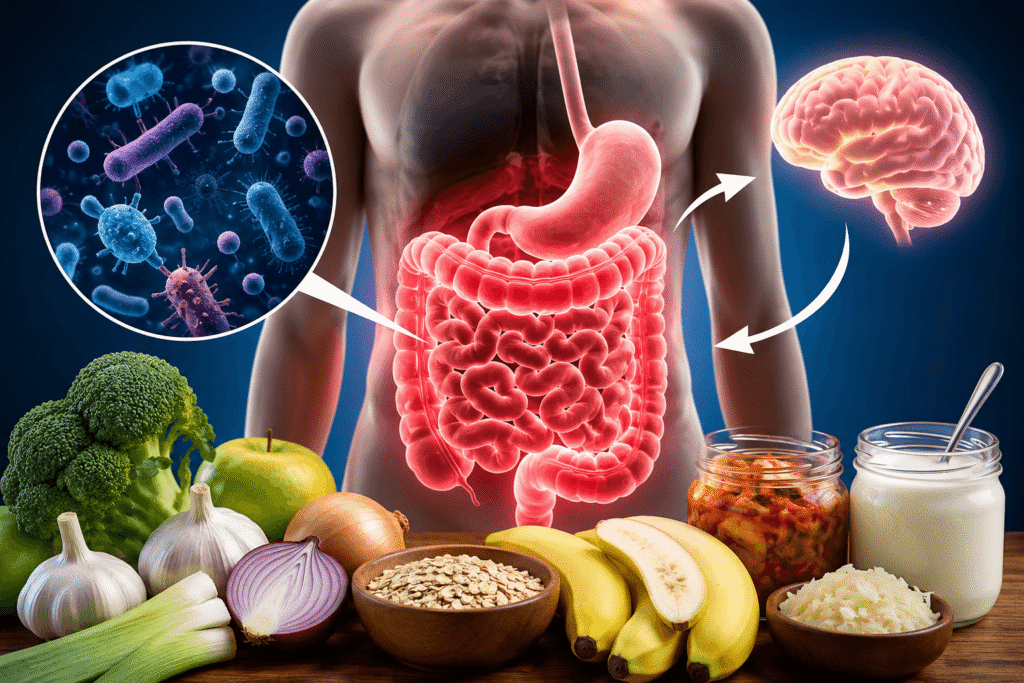
Right now, there are trillions of microscopic workers living inside your digestive tract. This ecosystem, known as your gut microbiome, acts less like a passive organ and more like a demanding, sensitive “Internal Boss.”
When you feed these microbes what they want, they reward you by manufacturing 90% of your body’s serotonin (the happiness chemical) and keeping your metabolism humming. But when your lifestyle offends them, they go on strike. They send panic signals up the Vagus Nerve (the biological phone line connecting your gut to your brain), triggering everything from brain fog to intense sugar cravings.
Learn more about the gut-brain connection from the National Institutes of Health (NIH)
If you’ve been feeling off lately, it might not be “just stress.” Here are 7 hidden signs your internal boss is completely miserable, along with the precise, science-backed natural solutions to fix it.

1. Intense, Uncontrollable Sugar Cravings
Have you ever had a sudden, overwhelming urge for chocolate that felt completely outside of your control? That is because bad bacteria and yeast strains (like Candida) have hijacked your internal control room.
These evolutionary hitchhikers don’t survive on broccoli, they feed on simple sugars, and they aren’t afraid to demand a delivery.
A landmark study published in BioEssays via Wiley Online Library reveals that these pathogenic microbes actively manipulate host eating behavior to get the nutrients they need. They send tiny signaling molecules up your Vagus nerve, which physically alters your taste receptors and triggers anxiety when you don’t eat sugar.
To break this cycle, you must starve them out. Swap refined for prebiotic fibers like garlic, onions, oats, and slightly green bananas. Prebiotics act as an exclusive catering service that only your beneficial bacteria can digest, allowing your good workforce to multiply and naturally quiet those intense cravings.
2. “Unexplained” Brain Fog and Afternoon Fatigue
If your brain feels wrapped in heavy smoke by 3 PM, the communication line between your gut and your head is likely compromised.
When your gut microbiome is inflamed, it releases inflammatory proteins called cytokines into your bloodstream. These cytokines cross the blood-brain barrier to cause neuroinflammation, resulting in severe mental fatigue and brain fog.
To clear the smoke, give your internal crew a break by practicing a daily 12-to-14-hour overnight fast (such as closing the kitchen at 7 PM and eating breakfast at 9 AM).
This downtime activates your gut’s “migrating motor complex” an internal sweeping crew that clears out cellular debris and repairs the gut lining without the constant interruption of digesting food.
3. Sudden Food Intolerances (Gluten or Dairy Sensitivity)
When you suddenly can’t tolerate foods you used to love, it means your internal security guards have fallen asleep on the job, leaving literal gaps in your defensive fortress wall. In the medical world, this is called increased intestinal permeability, or Leaky Gut.
When the tight junctions of your intestinal lining loosen, undigested food particles leak directly into your bloodstream. Your immune system spots them, panics, and treats harmless proteins like gluten or dairy as dangerous foreign invaders.
You can patch these gaps naturally by incorporating collagen-rich foods, bone broth, or L-glutamine supplements into your routine. These nutrients act like biological cement, knitting those cellular junctions back together and reinforcing your body’s primary boundary.
4. Skin Flares (Adult Acne, Eczema, or Rosacea)
When your primary internal waste disposal system is totally backed up, your body is forced to use your skin as an “emergency exit” to push out toxins. This phenomenon relies on the Gut-Skin Axis, a well-documented biological pathway.
According to a peer-reviewed paper via the National Center for Biotechnology Information (NCBI), gut dysbiosis (an imbalance of bad vs. good bacteria) triggers systemic inflammation that manifests directly through your skin’s surface barrier and sebaceous glands.
To clear your complexion, you need to re-seed the workforce from the inside out. Introduce one small serving of traditionally fermented foods (like raw grass-fed kefir, kimchi, or sauerkraut) into your daily diet to deploy millions of peaceful, anti-inflammatory bacteria that calm your skin from within.
5. Constant Bloating After Eating Anything
If you bloat after eating almost anything, your digestive workforce has effectively gone on a union strike.
This happens because eating while stressed or distracted places your body in a sympathetic (“fight-or-flight”) state, which instantly shuts down stomach acid and enzyme production. Without these essential tools, your food sits in your digestive tract and literally ferments, creating pockets of trapped, painful gas.
To fix this, put your phone away during meals and commit to chewing each bite 20 to 30 times. This simple action triggers crucial saliva enzymes and signals your stomach to prepare its acid defenses, completing the heavy lifting before the food ever reaches your lower gut.
6. Frequent Mood Swings and Low Motivation
When your mood crashes for no clear reason, your internal “happiness factory” has likely run out of raw materials.
While we traditionally think of serotonin as a brain chemical, roughly 90% of your body’s serotonin is actually manufactured by your gut microbes. If your microbiome is damaged, your brain is stranded without its primary mood stabilizer.
You can boost production by feeding your factory workers polyphenols—vibrant defense compounds found in dark chocolate (85%+), wild blueberries, green tea, and hazelnuts. Microbes feast on these compounds and reward you by pumping out calm, stabilizing neurotransmitters.
7. Stubborn Weight That Won’t Budge
If you eat healthy but still can’t lose weight, you likely have an internal storage manager who is terrified of starving and is aggressively hoarding every calorie as body fat.
Clinical trials demonstrate that an overgrowth of a bacterial family called Firmicutes extracts significantly more calories from the exact same plate of food compared to another family called Bacteroidetes.
To balance the scales, adopt the 30-Plant Rule. Aim to consume 30 different types of whole plants, herbs, nuts, and seeds every week. This wide variety of fiber naturally starves out the calorie-hoarding strains and feeds the lean, fat-burning bacteria, changing your metabolism from the inside out.
Conclusion: Take the “One-Habit Challenge”
Healing your gut doesn’t mean you have to turn your entire life upside down overnight. In fact, forcing too many massive changes at once will only cause your internal boss to stress out even more.
True, lasting digestive health is built on tiny, daily victories. By picking just one or two small micro-habits from this list—like chewing your food longer or trying a simple overnight fast—you can naturally steer your microbiome back into balance.
Let’s Chat: What’s Your First Step?
Which of these 7 signs resonated with you the most, and which natural fix are you going to try first this week?
Let’s talk about it! Head over to our Facebook Page DAILY HEALTH EXPRESS right now and leave a comment on today’s featured post.
I’ll be hanging out in the comments section all day to answer your specific questions, swap gut-friendly meal ideas, and support you as you get your health back on track. See you there!
Pingback: Poor Circulation: Most Common Symptoms You Should Never Ignore - Daily Health Express