
Quick Answer
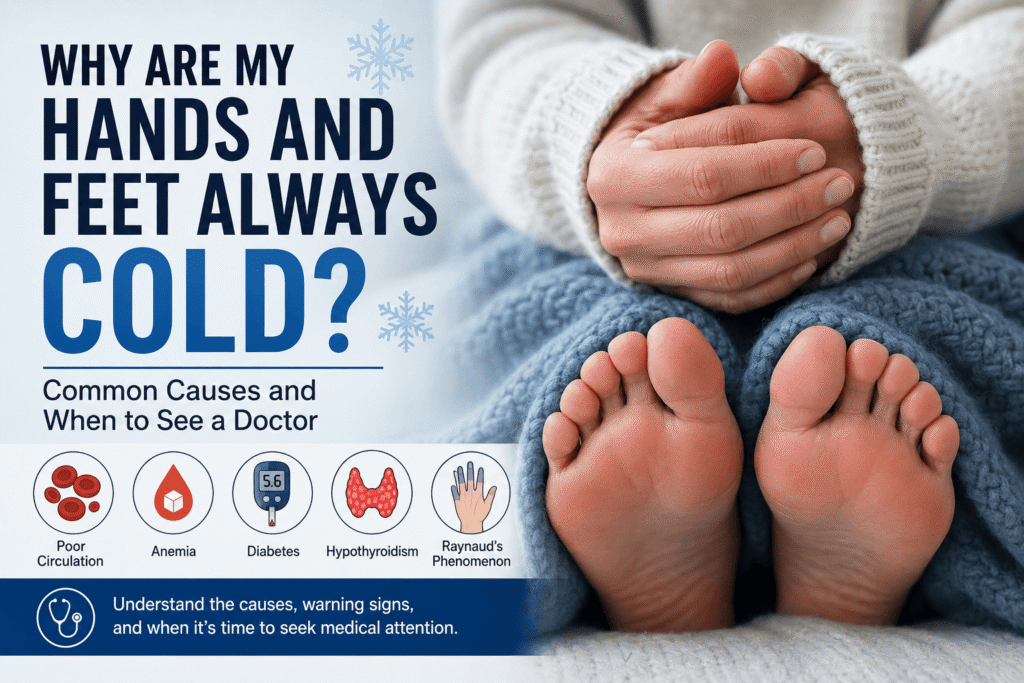
Cold hands and feet are often caused by exposure to cold temperatures or reduced blood flow. However, they can also be linked to underlying conditions such as anemia, diabetes, hypothyroidism, Raynaud’s phenomenon, or heart and blood vessel disorders. While occasional cold hands and feet are usually harmless, persistent symptoms or those accompanied by pain, numbness, or skin color changes should be evaluated by a healthcare professional.
Why Do Hands and Feet Feel Cold?
Your hands and feet are the parts of your body farthest from your heart, making them more sensitive to changes in blood flow and temperature. When you’re exposed to cold weather, your body naturally narrows the small blood vessels in your hands and feet to preserve heat for vital organs such as your heart, brain, and lungs.
In some cases, however, cold hands and feet may be a sign that blood isn’t circulating as efficiently as it should. Reduced blood flow can limit the amount of warm, oxygen-rich blood reaching your extremities, leaving them feeling unusually cold. This may occur because of poor circulation or certain underlying medical conditions that affect your blood vessels, nerves, or heart.
While it’s normal for your hands and feet to feel cold occasionally, symptoms that occur frequently, persist even in a warm environment, or are accompanied by pain, tingling, numbness, or changes in skin color should not be ignored.
Common Causes of Cold Hands and Feet
Ever wonder why your fingers and toes feel like ice cubes, even when everyone else in the room is perfectly comfortable? While icy extremities are often just your body’s natural reaction to a chilly room, they can sometimes be a subtle warning sign of an underlying health issue. Understanding what’s happening beneath the skin can help you figure out when a pair of thick socks will do, and when it’s time to consult a professional.
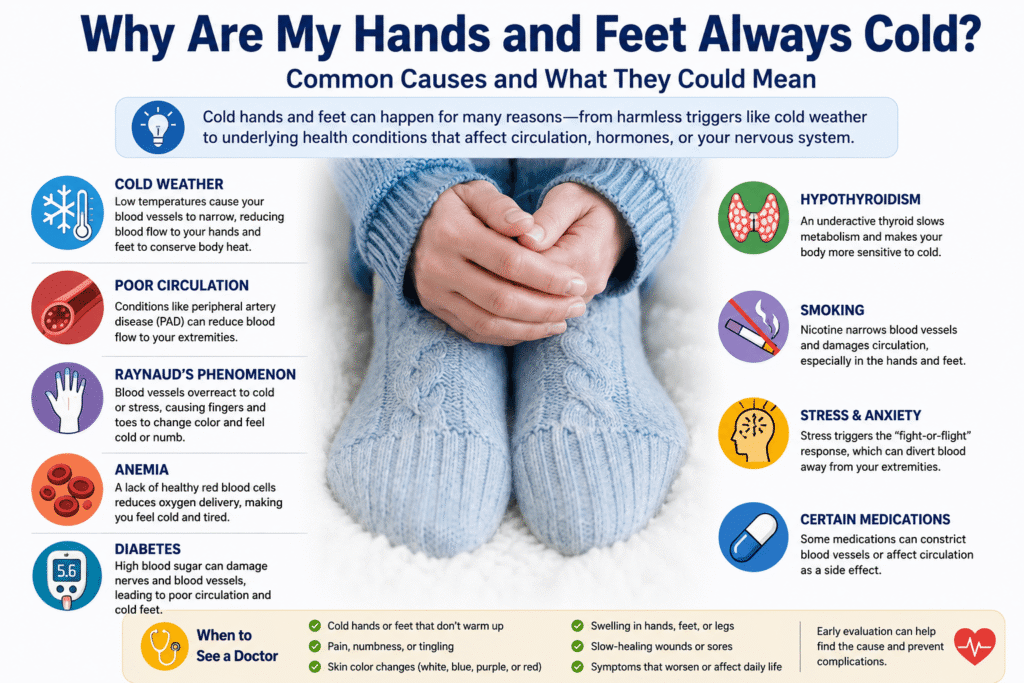
1. Cold Weather
This is your body’s built-in survival mode. When temperatures drop, your nervous system automatically restricts blood flow to your skin and extremities—a process called vasoconstriction. By narrowing these blood vessels, your body successfully traps heat around your vital internal organs to keep you alive. Once you step into a warm room or wrap your hands around a mug of tea, normal blood flow should return pretty quickly.
2. Poor Circulation
Think of your circulatory system as a highway network; if there’s a traffic jam or a narrow lane, resources can’t get to the destination. When blood struggles to reach the furthest points of your body, your hands and feet are the first to feel the freeze. This sluggish blood flow is frequently tied to cardiovascular issues, such as Peripheral Artery Disease (PAD), where cholesterol plaques narrow the arteries feeding your limbs.
3. Raynaud’s Phenomenon
For people with Raynaud’s, the body’s reaction to cold or sudden stress goes into overdrive. Instead of slightly narrowing, the tiny blood vessels in the fingers and toes completely spasm and shut down. During an episode, the skin typically undergoes a startling tricolor change: turning stark white from lack of blood, then a bruising blue from lack of oxygen, and finally a throbbing red as the vessels reopen and blood flow returns.
4. Anemia
Your red blood cells act like delivery trucks carrying oxygen to every tissue in your body. If you have anemia, you either don’t have enough red blood cells or they lack a protein called hemoglobin to hold the oxygen. Without a steady supply of oxygen, your body struggles to generate heat efficiently. If your cold hands are paired with chronic fatigue, pale skin, dizziness, or mild shortness of breath, a lack of iron or vitamins could be the culprit.
5. Diabetes
Over time, chronically high blood sugar levels act like sandpaper on the inside of your body, damaging both your delicate blood vessels and your nervous system. This can lead to a complication known as diabetic neuropathy. When the nerves in your feet are damaged, they can misfire and send false “cold” signals to your brain, which are often accompanied by frustrating sensations like tingling, numbness, or a dull burning feeling.
6. Hypothyroidism
Your thyroid gland is essentially your body’s master thermostat and metabolic engine. When it’s underactive (hypothyroidism), it doesn’t produce enough hormones to keep your internal engine running at full speed. This metabolic slowdown reduces the amount of heat your body naturally generates, making you incredibly sensitive to even mild shifts in temperature. Other common clues include unexplained weight gain, sluggishness, and dry skin.
7. Smoking
Every time you inhale cigarette smoke, nicotine causes your blood vessels to immediately tighten and constrict throughout your entire body. Over the long term, smoking severely damages the lining of your arteries and accelerates the buildup of plaque, drastically increasing your risk of Peripheral Artery Disease (PAD). The good news is that quitting smoking is one of the fastest ways to open those pathways back up and restore warmth to your limbs.
8. Stress and Anxiety
Your body can’t always tell the difference between a physical threat and psychological stress. When you are anxious or overwhelmed, your body triggers a “fight-or-flight” response, flooding your system with adrenaline. This hormone intentionally diverts blood away from non-essential areas—like your fingers and toes—and channels it directly to your heart and major muscles. Your hands should warm right back up once your nervous system calms down.
9. Certain Medications
Sometimes, icy fingers are simply an unintended side effect of a prescription. Medications like beta-blockers (used for high blood pressure), certain migraine drugs, and even over-the-counter decongestants work by narrowing blood vessels or altering blood flow. If you suspect your medication is causing the chill, never stop taking it abruptly; instead, have a quick chat with your doctor to see if an alternative is available.
When to seek medical advice: While occasionally having cold extremities is usually nothing to worry about, you shouldn’t ignore it if it becomes a constant battle. If the coldness is painful, won’t go away in a warm environment, or is accompanied by changes in skin color, persistent numbness, or slow-healing sores on your feet, it is highly recommended to schedule a checkup with your healthcare provider.

Symptoms That May Accompany Cold Hands and Feet
When your fingers and toes feel like ice, that chill rarely travels alone. Often, your body drops other subtle clues alongside the coldness that can help pinpoint exactly what is going on beneath the skin. Paying close attention to these accompanying signs is the best way to determine whether you just need a warmer pair of gloves or if it’s time to schedule a talk with your doctor.
1. Tingling or “Pins and Needles”
That familiar, prickly sensation—formally known as paresthesia—usually happens when a nerve is temporarily compressed or when blood flow to an area hits a bottleneck. It feels like a wave of tiny static electricity waking up in your fingers or toes. While it’s common for this feeling to briefly pop up and fade away after you move around, a persistent tingling sensation that refuses to leave deserves a closer look.
2. Weakness or Fatigue
Muscles require a constant, heavy supply of oxygen to maintain their strength and stamina. If a sluggish circulatory system is leaving your limbs running on fumes, you might notice a heavy, drained feeling in your arms or legs. Your muscles might tire out much faster than they used to during everyday tasks, leaving you feeling generally fatigued even if you haven’t changed your daily routine.
3. Slow-Healing Wounds
Your blood carries the essential building blocks, oxygen, and immune cells required to repair tissue damage. If poor circulation or a condition like diabetes restricts that flow, even a tiny minor cut, blister, or scrape can take weeks to close up. Slow-healing sores on the feet are a major red flag, as neglected minor wounds can easily turn into severe infections without proper care.
4. Swelling
When your cardiovascular system isn’t pumping efficiently, or if the veins in your lower body are struggling to push blood back up toward your heart, gravity wins. Fluid can get left behind, pooling in your tissues and causing noticeable puffiness—a condition known as edema. If you find that your shoes or rings are suddenly feeling uncomfortably tight alongside that icy chill, your circulation might be hitting a roadblock.
5. Pain or Muscle Cramps
When your muscles are forced to work without enough oxygen-packed blood, they will quickly let you know. This lack of fuel can cause a deep, heavy ache, a rhythmic throbbing, or sudden, tight muscle cramps—particularly when you are out walking or using your hands. If your extremities start hurting the moment you get moving, it’s often a sign that your circulatory highway is struggling to keep up with demand.
6. Skin Color Changes
Your skin needs a steady stream of oxygen-rich blood to maintain its natural tone. If that supply gets cut off, your extremities will show it. You might notice your fingers or toes blanching a stark white, shifting into a bruised blue or purple color when exposed to a chill, and then flushing a bright, angry red as the warmth returns. This dramatic color shift is a classic hallmark of blood vessels overreacting to cold or stress.
7. Numbness
When blood flow drops significantly or peripheral nerves face long-term wear and tear, communication with your brain gets disrupted. This can leave your hands or feet feeling completely numb, making it tough to properly register temperature, pain, or even a simple touch. Because losing sensation puts you at risk for accidental injuries, persistent numbness is always a clear signal to consult a professional.
When Should You See a Doctor?
Occasional cold hands and feet are usually not a cause for concern, especially after exposure to cold weather. However, if your symptoms are persistent, frequent, or occur alongside other warning signs, it’s important to seek medical advice. A healthcare professional can determine the underlying cause and recommend the most appropriate treatment.
Schedule an Appointment If You Experience:
- Cold hands and feet that remain cold, even in a warm environment.
- Frequent tingling, numbness, or pain in your fingers or toes.
- Symptoms that are getting worse or interfering with your daily activities.
- Slow-healing cuts, sores, or ulcers, especially if you have diabetes.
- Swelling in your hands, feet, ankles, or lower legs.
- Skin color changes, such as fingers or toes turning white, blue, purple, or black.
Seek Emergency Medical Care Immediately If You Experience:
- Sudden, severe pain in an arm or leg.
- A wound with signs of infection, such as increasing redness, swelling, pus, or fever.
- Chest pain, shortness of breath, or a rapid or irregular heartbeat.
- A hand or foot that suddenly becomes cold, pale, or blue.
- Sudden weakness or numbness, especially on one side of the body.
Remember: While cold hands and feet are often harmless, they can sometimes be a sign of an underlying condition affecting your circulation, nervous system, or heart. Seeking medical attention early can help identify the cause, begin appropriate treatment, and reduce the risk of complications.
How Doctors Diagnose the Cause
If your cold hands and feet are persistent or accompanied by other symptoms, your healthcare provider may recommend one or more of the following tests:
- Physical examination: This is your doctor’s first line of defense. They will carefully check your pulse, assess your skin temperature and color, and look for any visual clues that might suggest your circulation isn’t flowing as smoothly as it should.
- Blood tests: These are essential for looking at your overall “internal landscape.” By testing your blood, a doctor can quickly spot clues pointing to anemia, signs of hidden infection, or high cholesterol levels that might be clogging your arteries.
- Blood sugar tests: Because high glucose levels over time can be toxic to both your nerves and your blood vessels, this test is a standard way to screen for or monitor diabetes, one of the most common culprits behind cold, tingling feet.
- Thyroid function tests: Since your thyroid acts as your body’s master thermostat, this test is crucial if you suspect your internal heater is broken. It checks for hypothyroidism, which can leave you feeling perpetually chilled regardless of the temperature outside.
- Doppler ultrasound: This is a non-invasive imaging tool that uses sound waves to “see” inside your veins and arteries. It allows your doctor to map out exactly how your blood is moving and identify any specific areas where vessels have narrowed or become blocked.
- Ankle-Brachial Index (ABI): This is a quick and clever test that compares the blood pressure in your arms to the blood pressure in your ankles. It’s a highly effective way to confirm whether or not you are dealing with Peripheral Artery Disease (PAD).
The tests your doctor recommends will depend on your symptoms, medical history, and physical examination.
How to Keep Your Hands and Feet Warm
In many cases, simple lifestyle habits can help keep your hands and feet warm and support healthy circulation.
- Dress warmly: Layering up is your first line of defense against a chill. Opt for high-quality gloves, thick thermal socks, and insulated footwear that keep the heat trapped close to your skin rather than letting it escape into the cold air.
- Stay physically active: Think of movement as turning up your body’s internal furnace. Engaging in regular exercise gets your heart pumping, opens up your blood vessels, and ensures that warm, oxygen-rich blood efficiently travels all the way down to your fingers and toes.
- Stay hydrated: Drinking enough water keeps your blood at the right consistency so it can flow effortlessly through your body. When you are properly hydrated, your heart doesn’t have to work as hard to push blood through the tiny vessels in your hands and feet.
- Avoid smoking: Giving up cigarettes is one of the most powerful things you can do for your extremities. Because nicotine instantly constricts your blood vessels and damages your arteries over time, quitting allows your circulatory system to naturally open back up and restore vital warmth.
- Manage diabetes and blood pressure: Keeping your numbers in a healthy range acts as a shield for your circulatory network. By controlling blood sugar and blood pressure, you prevent the long-term wear and tear that narrows blood vessels and damages peripheral nerves.
- Take breaks if sitting for long periods: Sedentary habits act like a stop sign for your blood flow. Make it a point to stand up, stretch, or take a quick walk around the room every single hour to shake off stagnation and get your circulation moving again.
- Wear warm socks and gloves: Don’t wait for freezing weather to protect your extremities. Keeping comfortable socks and gloves nearby is just as important during the summer months if you spend long periods in heavily air-conditioned offices or homes.
If your symptoms continue despite these measures, consult a healthcare professional.
Conclusion
Cold hands and feet are often a normal response to cold temperatures. However, if they occur frequently, persist even in a warm environment, or are accompanied by symptoms such as pain, numbness, skin color changes, or slow-healing wounds, they may be a sign of an underlying health condition that requires medical attention.
Simple lifestyle habits such as staying physically active, avoiding smoking, staying hydrated, and managing conditions like diabetes and high blood pressure can help support healthy circulation. However, if your symptoms continue or worsen, it’s important to consult a healthcare professional for an accurate diagnosis and appropriate treatment.
For more information on circulation disorders and heart health, you can visit trusted medical resources such as:
If you also experience tingling, numbness, leg pain, or slow-healing wounds, you may find our guide on Signs of Poor Circulation: Causes, Symptoms, and When to Get Help helpful.
Frequently Asked Questions
Is it normal to have cold hands and feet all the time?
Occasional cold hands and feet are common, especially in cold weather. However, if they remain cold even in a warm environment or are accompanied by pain, numbness, or skin color changes, they should be evaluated by a healthcare professional.
Can anxiety cause cold hands?
Yes. Anxiety and stress can temporarily narrow blood vessels, reducing blood flow to the hands and feet and making them feel cold.
Does diabetes cause cold feet?
Yes. Diabetes can damage blood vessels and nerves, leading to reduced circulation and nerve damage (diabetic neuropathy), which may cause cold feet.
Can dehydration make your hands and feet cold?
Dehydration may reduce blood volume, making it harder for your body to maintain normal circulation. While it’s not the most common cause, staying well hydrated supports healthy blood flow.
Are cold hands always a sign of poor circulation?
No. Cold hands and feet can result from cold weather, stress, or temporary narrowing of blood vessels. However, persistent symptoms may indicate an underlying condition such as poor circulation, anemia, diabetes, hypothyroidism, or Raynaud’s phenomenon.