
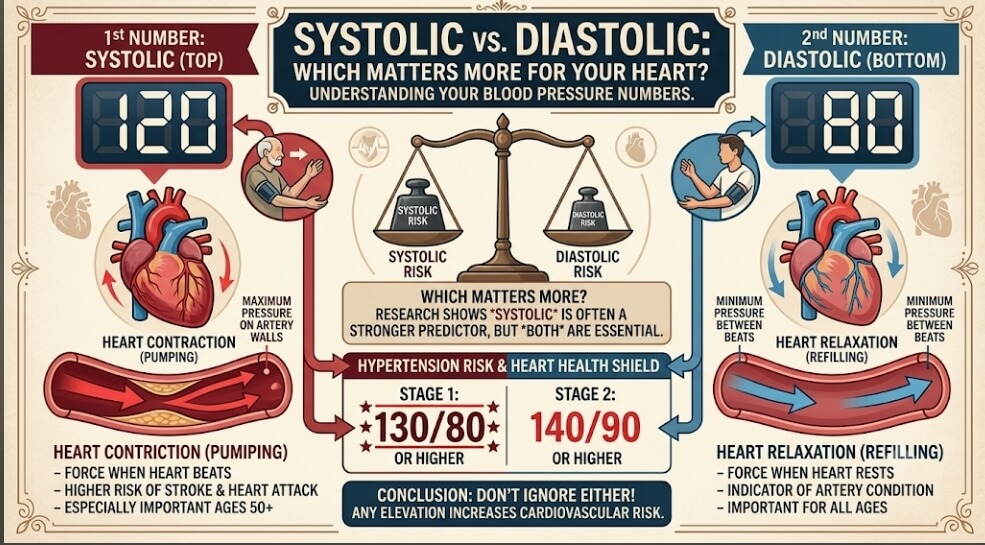
Systolic vs Diastolic Blood Pressure can reveal important clues about your heart health. Every time you check your blood pressure, you receive two numbers, often something like 120/80 mmHg. While many people only ask, “Is it normal or high?” understanding what the top and bottom numbers mean can help you identify potential risks and take steps to protect your heart, brain, and kidneys.
But focusing only on the overall diagnosis means missing a critical piece of the puzzle. One of those two numbers might be quietly signaling a much higher long-term risk to your cardiovascular health.
Understanding the distinct roles of systolic and diastolic pressure can help you take action to protect your heart, brain, and kidneys long before symptoms appear.
What Do Your Blood Pressure Numbers Actually Mean?
Blood pressure is the force of your blood pushing against the walls of your arteries. It is measured using two distinct metrics:
- The Top Number (Systolic Pressure): This measures the pressure in your arteries when your heart beats and actively pumps blood throughout your body.
- The Bottom Number (Diastolic Pressure): This measures the pressure in your arteries when your heart rests between beats.
At-a-Glance: Systolic vs. Diastolic Pressure
| Metric | What It Measures | When It Occurs | Key Risk Association |
| Systolic (Top) | Active pumping force | During a heartbeat | Heart attacks, strokes, arterial stiffness (especially age 40+) |
| Diastolic (Bottom) | Resting arterial pressure | Between heartbeats | Long-term vascular strain (especially in younger adults) |
The Shift in Modern Medicine: Why the Top Number Takes Center Stage
Medical perspectives have evolved over the decades. Doctors used to place the heaviest emphasis on the diastolic (bottom) number, believing it was the definitive indicator of cardiovascular danger.
Today, clinical research paints a different picture. For adults over the age of 40, the systolic (top) number is considered a much stronger predictor of serious complications like heart attacks and strokes..
Why High Systolic Pressure Is Particularly Dangerous
As we age, our blood vessels lose their youthful elasticity. Instead of stretching easily like a rubber band, arteries become stiff and rigid.
When the heart pumps blood into these stiffened vessels, the pressure spikes. Chronically high systolic hypertension places an intense, continuous strain on your organs, directly leading to:
- Stroke
- Heart attack
- Heart failure
- Kidney damage or failure
- Aneurysms and vision loss
The Silent Killer: The true danger of elevated systolic pressure is its lack of obvious symptoms. You can feel completely healthy while your arteries are experiencing continuous, microscopic damage.
Don’t Ignore the Bottom Number: The Role of Diastolic Pressure
While the top number gets the most attention in older demographics, the diastolic number remains highly relevant.
High diastolic pressure is frequently seen in younger adults. It often indicates increased resistance in the body’s smaller blood vessels. Left untreated over a lifetime, elevated diastolic pressure creates chronic vascular strain that paves the way for severe cardiovascular issues later in life.
Ultimately, both numbers matter—they simply tell different parts of your heart’s story.
Common Causes of High Blood Pressure
Hypertension rarely develops overnight. It is typically the result of a gradual accumulation of lifestyle choices and genetic predispositions, including:
- High Sodium Intake: Excess salt causes the body to retain fluid, driving up arterial pressure.
- Physical Inactivity: A sedentary lifestyle weakens the heart muscle over time.
- Chronic Stress: Prolonged stress keeps your nervous system in a state that constricts blood vessels.
- Poor Sleep Quality: Sleep apnea and insomnia prevent the body from naturally lowering blood pressure at night.
- Lifestyle Habits: Smoking, heavy alcohol consumption, and carrying excess weight significantly increase your risk profile.
How to Lower Blood Pressure Naturally
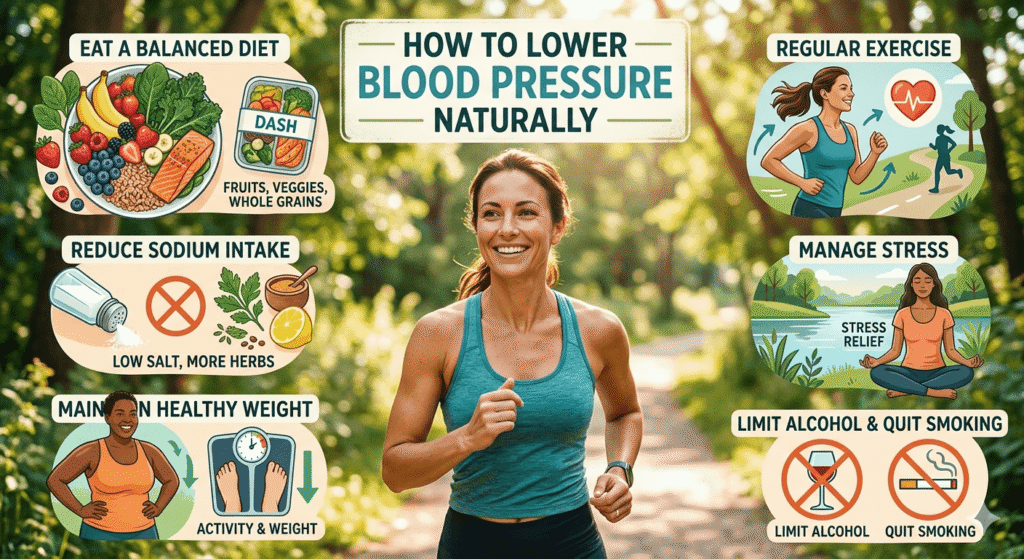
While prescription medication is necessary and lifesaving for many, everyday habits are your first line of defense in managing blood pressure.
1. Adopt a Heart-Healthy Diet
Incorporate foods rich in potassium, magnesium, and fiber, which naturally relax blood vessels. The DASH diet (Dietary Approaches to Stop Hypertension), which emphasizes fruits, vegetables, whole grains, and lean proteins, is highly effective.
2. Move Consistently
Aim for at least 150 minutes of moderate aerobic exercise (like brisk walking, swimming, or cycling) per week. Consistent movement keeps your blood vessels flexible.
3. Cut Back on Hidden Sodium
Look closely at nutritional labels. Processed foods, canned soups, and restaurant meals are often packed with hidden salt that spikes blood pressure.
4. Optimize Your Sleep Routine
Prioritize 7 to 9 hours of uninterrupted sleep per night. Your cardiovascular system uses sleep to rest, recover, and reset its baseline pressure.
5. Practice Stress Reduction
Chronic stress hormones narrow your blood vessels. Incorporate daily walks, meditation, or deep breathing exercises to keep your nervous system balanced.
Protect Your Heart by Knowing Your Numbers
Because high blood pressure is notoriously silent, routine monitoring is your best tool for early intervention. Don’t wait for a major health scare to find out what your cardiovascular system is trying to tell you. Check your blood pressure regularly, track both numbers, and work with your healthcare provider to keep your heart pumping safely for years to come.
For a detailed breakdown of medical baseline ranges, you can review the official American Heart Association Blood Pressure Chart to see exactly where your numbers fall.
For more information about high blood pressure, risk factors, and prevention, visit the World Health Organization (WHO) hypertension guide.
Was this information helpful? Share it with your family and friends—because knowing your blood pressure numbers could help someone take action before a serious health problem develops.
Related Posts:
I Cut Sugar for a Month: The Impact on My Heart and Arteries Surprised Me
Unlock Vibrant Energy: Easy Ways to Support Your Arteries
Poor Circulation: Most Common Symptoms You Should Never Ignore
7 Signs Your Gut May Be Unhealthy (Science-Backed Tips)
Unlock Your Health Potential: 7 Health Tips for a Happier, Healthier You
Pingback: The 2-Minute Fire Extinguisher: How to Stop Acid Reflux in Its Tracks Naturally - Daily Health Express